Ask ten parents whether kids should be paid for chores and you will get ten confident answers, often in opposite directions. Some say helping at home is part of being in a family and should never be paid. Others say chores are a child's first job and a paycheck teaches more than a lecture.
Both camps have a point. There is no single right answer, and the best choice depends on what you want your kids to learn. Here are the three approaches most families use, what each one tends to teach, and how to change course if the one you picked isn't working.
Approach 1: Allowance separate from chores
Your child gets a regular allowance no matter what. Chores are expected because everyone in the house pitches in, not because they are paid.
What it tends to teach:
- Money management. Kids get a steady amount and practice saving, spending and running out.
- Contribution. Helping at home is part of family life, not a transaction.
Things to watch for:
- With no link between chores and money, some kids see no reason to hurry. You may need another kind of motivation, like screen time after chores are done, or simply the expectation that jobs come first.
- If allowance is never held back, it can start to feel like an entitlement. That is fine if money management is the main lesson, and less fine if you want a work connection.
Try saying: "Your allowance is for learning to handle money. Chores are how we take care of our home together. They are two different things."
Approach 2: Paid per chore
Each job has a price. Make your bed, earn a little. Clean the bathroom, earn more. No work, no pay.
What it tends to teach:
- The link between effort and reward, in a very direct way.
- That different jobs carry different value.
- Planning. A child saving for something specific can see how many jobs it will take.
Things to watch for:
- Some kids start negotiating everything. "What do I get for carrying the groceries in?" can become a daily refrain.
- A child who doesn't need money this week may decide to skip chores entirely. If the work truly needs doing, you'll need a plan for that.
- Basic self-care, like brushing teeth, usually works better outside the pay system.
Try saying: "These jobs are extra, and they come with points. Taking care of yourself and your stuff is just part of the deal."
Approach 3: A hybrid of base allowance plus extras
A small base allowance covers the expected stuff: making your bed, clearing your plate, keeping your room livable. Bigger or optional jobs, like washing the car or helping clean out the garage, earn extra.
What it tends to teach:
- Contribution and earning, side by side. Some things you do because you live here. Other things are a way to earn more.
- Initiative. Kids who want more can look for extra jobs.
Things to watch for:
- It takes a little more setup, because you need to decide which jobs are baseline and which are extras.
- The line can blur. Write the two lists down so nobody has to remember who agreed to what.
Try saying: "Your base allowance covers your everyday jobs. If you want to earn more, here's the list of extras."
There's no wrong approach here, only one that fits your family better than the others.
Rewards and age guidance
Many families skip cash entirely, or mix it with other rewards. Points can turn into:
- Extra screen time
- Choosing what's for dinner
- A later bedtime on the weekend
- A trip to the park, the library or a favorite café
- A small amount of spending money, if you choose
This lets younger kids get the "work, earn, choose" experience before money means much to them, and it lets you set a price on things your child already wants.
Age guidance. These are starting points, not rules. Your child's maturity and your family's values matter more.
Around 5 to 7. Abstract money is hard at this age. Short, concrete rewards work better: a sticker, picking a book for bedtime, a few minutes of a favorite activity. If you use points, keep the rewards close and cheap so a child can earn one in a day or two.
Around 8 to 11. This is when many families start an allowance or a points system. Kids can count, wait for something bigger and understand saving. A mix of quick rewards and one bigger goal often works well.
Around 12 to 16. Teens can handle more responsibility and more autonomy. Larger, less frequent jobs and longer-term goals tend to fit. Some families let teens take on "real" jobs at home, like a weekly meal or yard work, with matching rewards. It's also a good age to let them help design the system.
How to switch without a fight
Changing your approach midstream is normal. Kids grow, budgets change, and sometimes the first plan just doesn't fit. A few ways to make the switch smoother:
- Explain the why. "We've been paying for every chore, and it's turned into a lot of bargaining. We want to try something different." Kids handle change better when it isn't sprung on them.
- Involve them. Ask which jobs feel fair as baseline and which should earn extra. Older kids especially push back less on a plan they helped shape.
- Keep what they've already earned. If your child has points or savings under the old system, honor them. Wiping a balance feels like a punishment.
- Set a trial period. "Let's try this for a month, then talk about how it's going." A defined end date makes it feel less permanent and more like an experiment.
- Expect a dip. Motivation may wobble for a week or two. Stay consistent before you decide it isn't working.
Keeping track without the spreadsheet
Whichever approach you choose, the tricky part is often the bookkeeping: which jobs were done, what they earned and what was spent. A notebook works. So does a whiteboard.
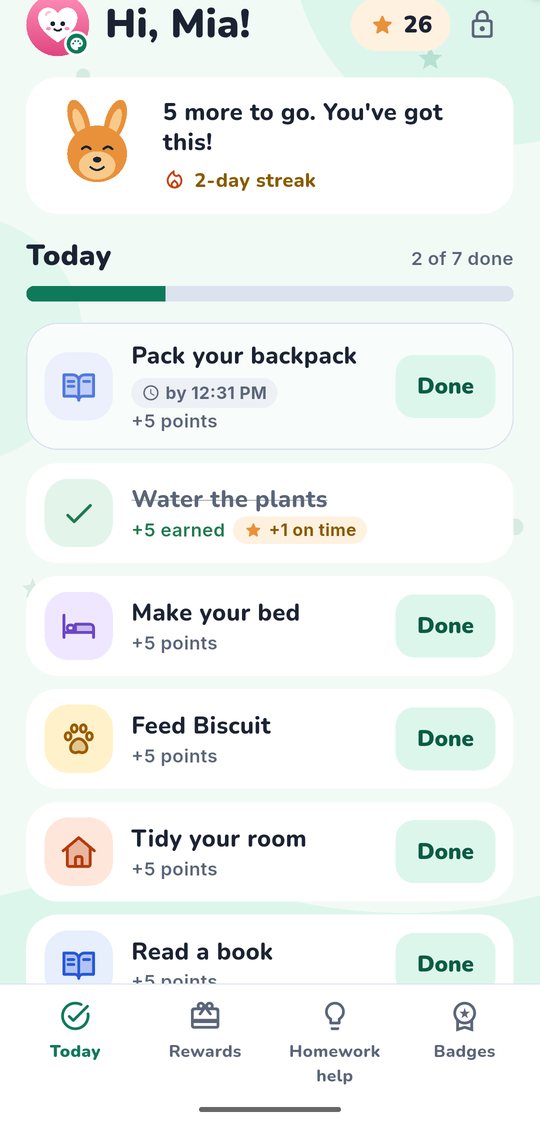
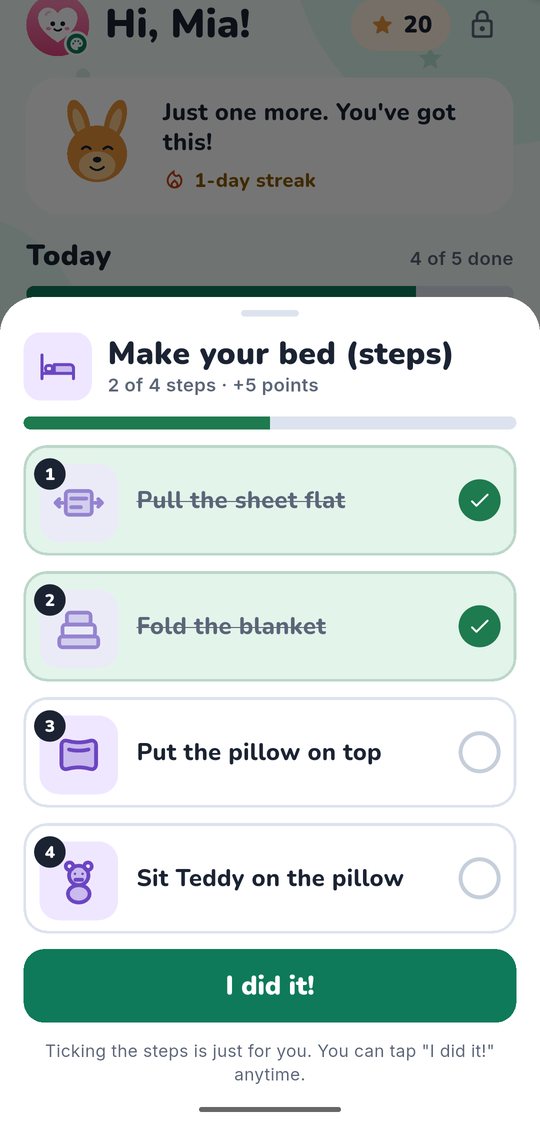
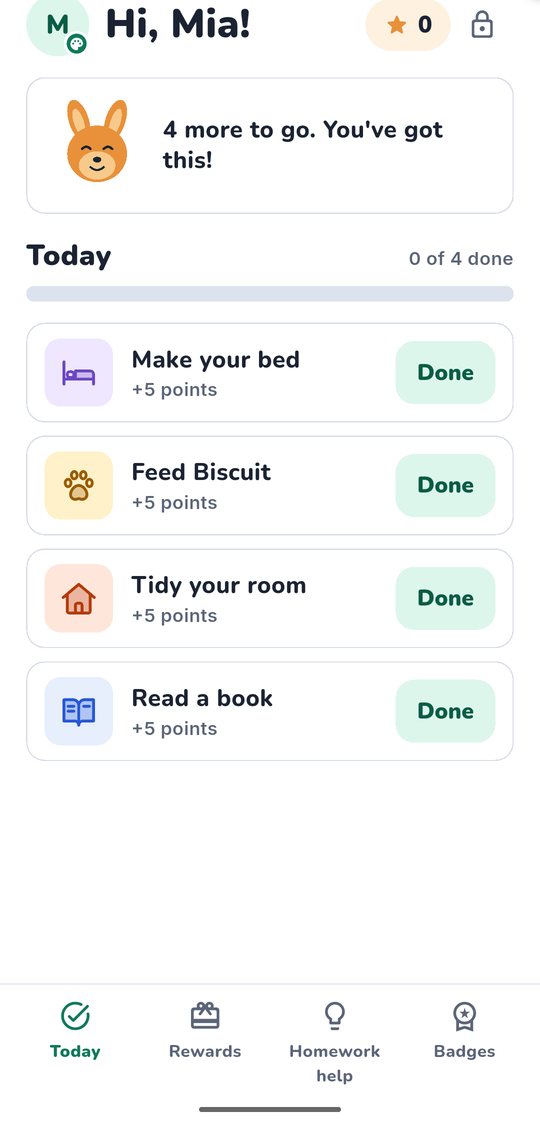
An allowance and chores app can also help. KudosNest is one we are building: you assign chores, approve them when they're done, and your child swaps points for rewards you set, whether that's screen time or spending money. The app tracks only points. It doesn't hold or move any money, so any cash stays between you and your child. It's on a waitlist for now.
Whatever you choose, the conversation you have with your kids about it is probably worth more than the system itself.